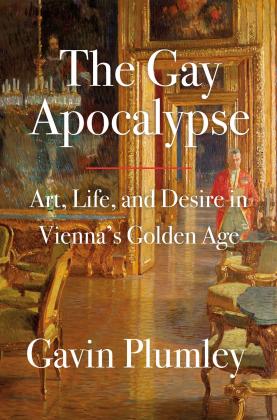
| Format | Hardcover |
| Publication Date | 04/06/27 |
| ISBN | 9798897102495 |
| Trim Size / Pages | 6 x 9 in / 336 |
A remarkable social and cultural history of Vienna at the turn of the last century, revealing how the capital was a thriving metropolis of extraordinary creativity in both the arts and sciences.
Vienna in the late nineteenth and early twentieth centuries was one of Europe’s great cultural melting pots. The city was the heart of an empire, its coffeehouses filled with the patter of Czech and Hungarian, as well as the lilting Viennese dialect, and home to a great outpouring of cultural brilliance across music, painting, sculpture, poetry, and much else.
Yet in contrast to Paris, Berlin, and even Oscar Wilde’s London, where the advent of modernity had been accompanied by more relaxed attitudes to queer sexualities, the official Viennese narrative was one of exclusive heterosexuality. And despite the obvious campery of the music of the Waltz Kings, the lavishly decorated cakes in the cafes, and the fabulously ornamental architecture of Imperial Vienna, the laws against homosexual activity in the Habsburg lands were far stricter than elsewhere in Europe.
But in reality, Vienna at the turn of the twentieth century was a deeply queer place—the emperor’s youngest brother was homosexual, the world-famous opera house was designed by a gay couple, Egon Schiele’s circle was filled with queer artists, and the Empress Sisi herself was perhaps no stranger to female love. Set against the vivid backdrop of one of the world’s great cities, and taking in stories from every walk of life—from scheming aristocrats, to lovelorn poets, to misbehaving gay soldiers, to Freud, Mahler, Schiele, Hofmannsthal and many others—The Gay Apocalypse reveals a side of Vienna and the Viennese rarely seen, turning the traditional narrative of the Austrian capital entirely on its head.
Gavin Plumley is a “leading cultural historian” (the London Times) and broadcaster, known for his work on Central European art and music. He is well known from his lectures at museums, galleries, and festivals, from his articles in newspapers and magazines, and from appearing on radio, television, and film. Gavin is the author of A Home for All Seasons, which was published in Britain. The Gay Apocalypse is his first book to be published in America. He lives in Ardingly in Sussex, England.
Buy it now in print:
Buy it now in ebook:
"This is a fascinating, untold story, set in an age of artistic brilliance. It reveals the empowering queerness at the heart of society and culture, and in the process shows how what was perceived as decadence was in fact the vital spark of the spirit of the modern age.” Philip Hoare, author of Albert and the Whale and William Blake and the Sea Monsters of Love
“A superbly rendered narrative of a vital era in the arts, packed with revelation.” Sathnam Sanghera, author of Empire World and Tonight the Music Seems So Loud
"This is a riveting book: a stylish and engrossing account of the gay life that ‘hid’ in plain—sometimes ostentatious—sight in late-imperial Vienna, and a meticulous evocation of a world that feels by turns outré and uncannily close to our own. The Gay Apocalypse retraces the public and private lives of Vienna’s queer iconoclasts with wit and erudition, unfolding a story that is as extravagant, surprising, and contradictory as the metropolis it portrays.” James Cahill, author of The Violet Hour
“Thoroughly researched and brilliantly written, The Gay Apocalypse gives uncovered queer stories—and the often tragic lives inside them—the dignity and erudition they deserve and demand. Vienna is a metropolis of careful performances; Gavin Plumley attunes us to the artful choreography of gender and sexuality, politics and class. Taking us from domestic parlors and elegant coffeehouses to the hungry shadows of the Prater, where Viennese morality is flaunted and enforced. Plumley tells those histories with élan.” Richie Hofmann, author of Second Empire; A Hundred Lovers; and The Bronze Arms
"From Mahler to the military, Klimt to the Kaiser—Gavin Plumley’s impressively researched survey of fin-de-siècle Vienna uncovers a hotbed of higher gossip and scintillating exposés that fully justify its subtitle. This illuminating book tracks an elaborate network of cultural figures whose lives were rarely what they seemed to be. A witty, original, and fearless analysis—by an author whose queer sensibility and deep immersion in the culture of Mitteleuropa offers an understanding of what made the city such a fertile ground zero for the arts.” Virginia Nicholson, author of All the Rage: Stories from the Frontline of Beauty: A History of Pain, Pleasure, and Power: 1860-1960
Praise for Gavin Plumley’s A Home for All Seasons:
"A tender and illuminating history of an overlooked world, A Home for All Seasons is a beautiful portrait of time and place, a palpable labour of love.” Horatio Clare, author of Something of His Art
"What starts out as a straightforward house history morphs into something else, a wide-ranging meditation on place and past, taking in climate change, rural depopulation, the Reformation and folklore. A gentle, reflective book. Plumley is at his best when describing the things he loves: his husband, his new home, its history." The Literary Review
"Truly a revelation on every page.” Petroc Trelawny, author of Petroc Trelawny's Classical Music Puzzle Book
"A richly textured book, replete with illuminating discoveries and observations." Country Life
“Charming—a love-letter to home, history and nature.” Leah Broad, author of Quartet